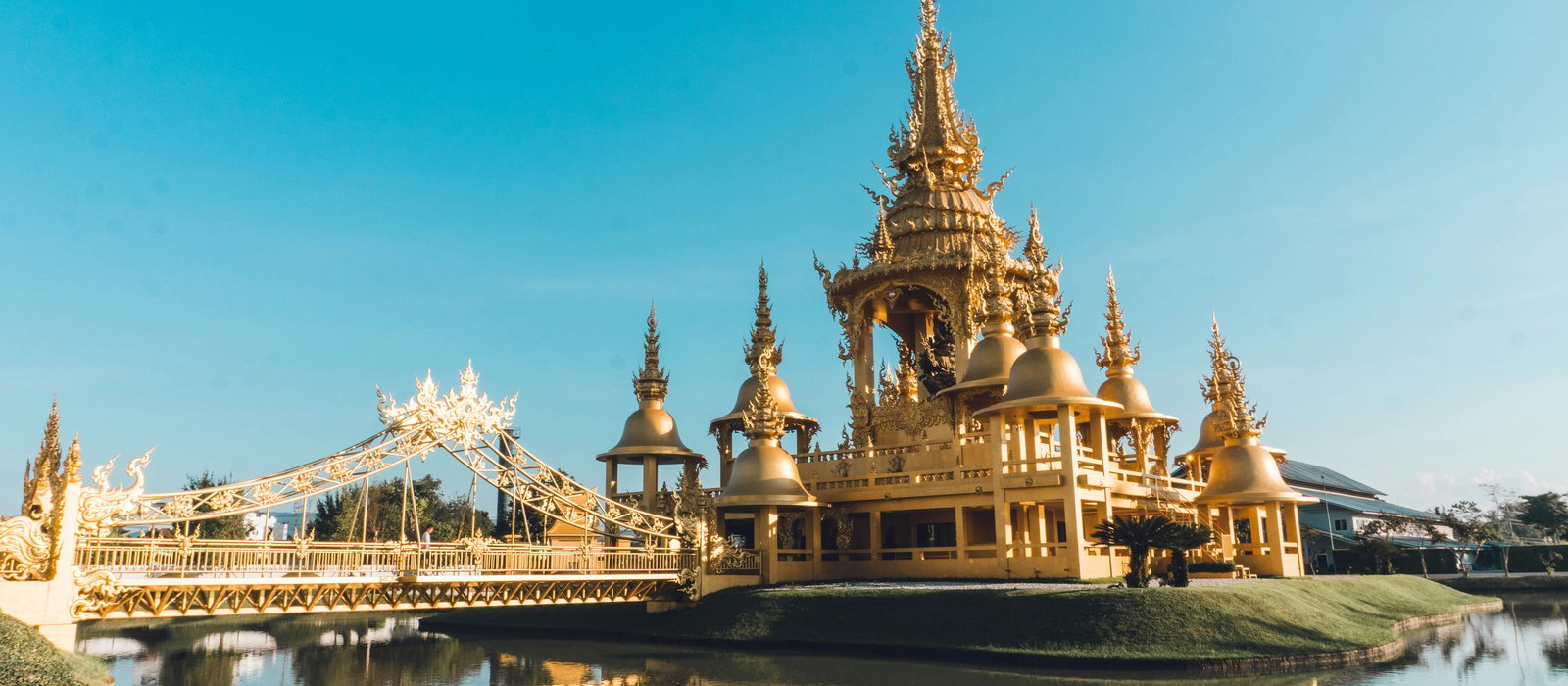
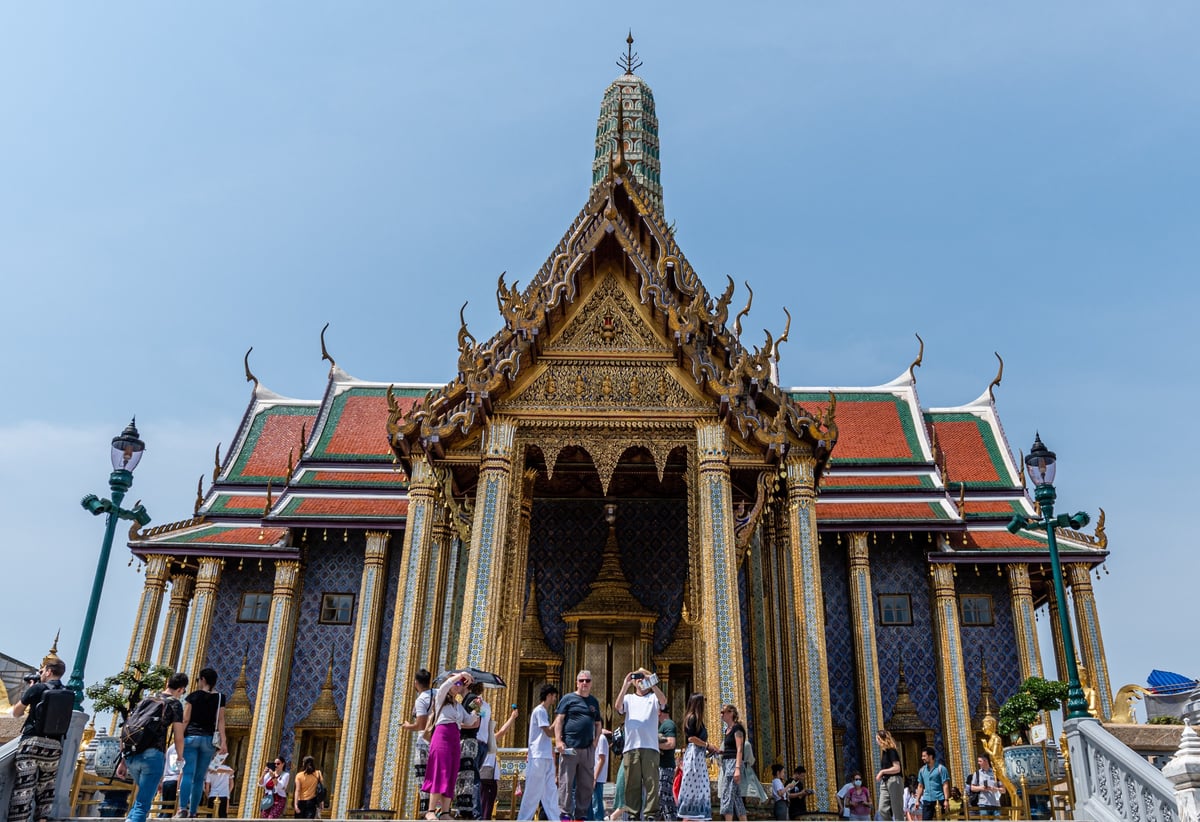
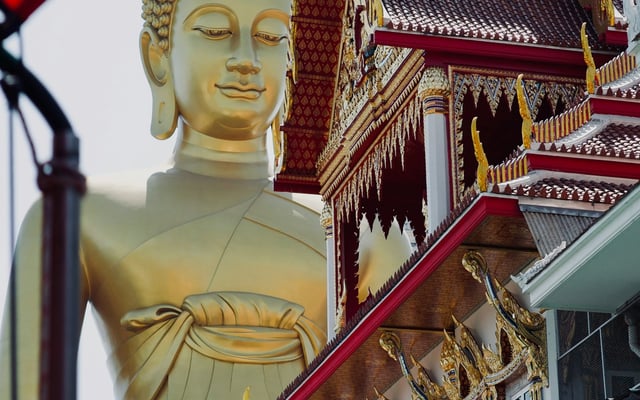
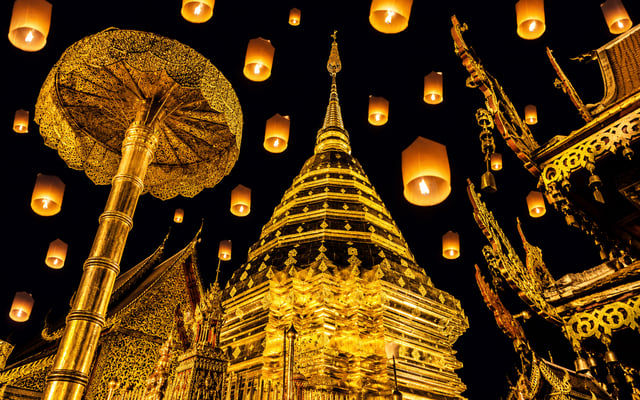
Thailand's temples (wats) are active places of worship with a real dress code, and being turned away from a major sight like the Grand Palace because of your outfit is a common, avoidable disappointment. The rules are simple once you know them. Here's exactly what to wear to Thai temples, plus general dress guidance for your trip.
The basic temple dress code
The core rule for everyone is to cover your shoulders and your knees. That means:
No bare shoulders — avoid tank tops, sleeveless shirts, and spaghetti straps. Sleeves (even short ones) or a covering layer are needed.
No exposed knees — shorts above the knee, short skirts, and short dresses aren't acceptable. Long trousers, long skirts, or below-the-knee shorts work.
This applies to both men and women. It's about respect for a sacred space, not fashion, and it's enforced — especially at major temples. At the most visited sites, staff actively check visitors at the entrance and will turn away anyone who doesn't meet the code, so it's not a rule you can quietly ignore the way you might elsewhere.
What you'll need to remove
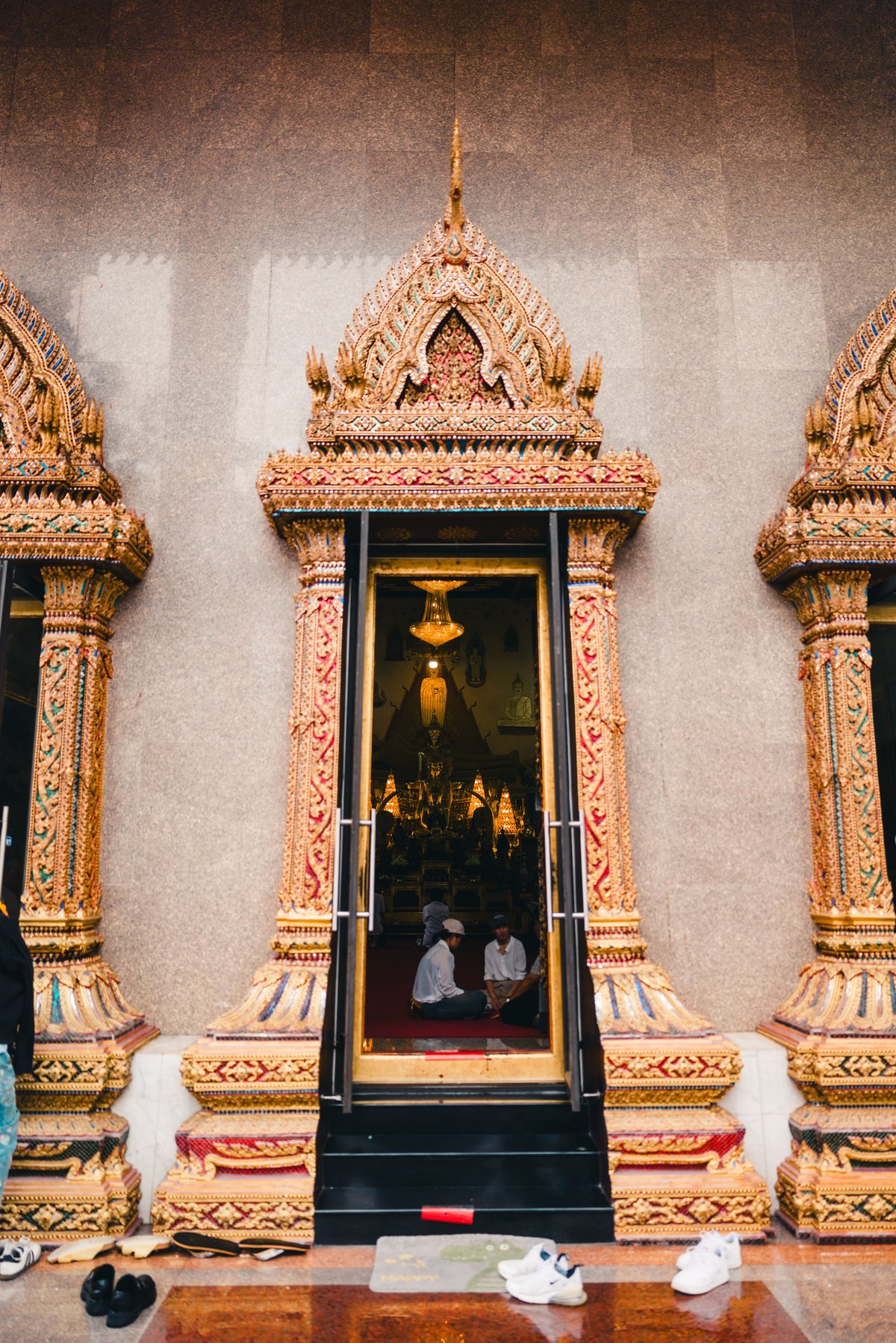
Before entering temple buildings (not just the grounds), you'll need to remove your shoes — so wear footwear that's easy to slip on and off, like sandals. Hats and sunglasses should also come off inside temple buildings. Socks are usually fine to keep on. It's worth noting that the shoes-off custom extends beyond temples to many guesthouses, homes, some shops, and certain restaurants — if you see a pile of shoes at the entrance, that's your cue to add yours to it.
Extra notes for women
The shoulders-and-knees rule is the main thing for women too, but a couple of extras: clothing shouldn't be see-through or too tight, and at the most sacred sites you may want to err conservative. Importantly, women should never touch a monk or hand anything directly to one — place the item down for him to pick up, or pass it via a man. A scarf or sarong is the single most useful item to carry: it instantly covers shoulders or wraps as a skirt.
What if you're not dressed right?
Many major temples, including the Grand Palace, offer sarongs or cover-ups to rent or borrow at the entrance if you turn up underdressed — but this isn't guaranteed everywhere, can involve a queue or a deposit, and is best avoided. The easy solution is to carry a lightweight scarf or sarong in your bag whenever temples might be on the agenda, so you're always covered (literally).
Practical clothing that works for temples and the heat
The challenge is dressing for both the tropical heat and the temple dress code, and a few choices solve both at once. Lightweight, loose long trousers or maxi skirts in breathable cotton or linen keep you cool while covering your knees. Loose, short-sleeved or light long-sleeved tops cover shoulders without overheating, and also protect against sun and mosquitoes. Convertible trousers and elephant-print harem pants (sold cheaply all over Thailand) are popular precisely because they're airy and temple-appropriate. The trick is choosing covering clothes that are loose and breathable rather than heavy — you can absolutely stay cool and respectful at the same time.
General dress tips for Thailand
Outside temples, Thailand is relaxed but it helps to read the setting. Beachwear stays at the beach — cover up when walking through towns or to restaurants. In cities and rural areas, modest, lightweight clothing is respectful and practical in the heat. Some rooftop bars and upscale venues enforce smart-casual dress codes (no shorts, vests, or flip-flops). And lightweight, breathable fabrics that cover up also protect you from sun and mosquitoes. Dressing with a little awareness goes a long way in Thailand. For any cover-up purchases, a live converter helps with pricing:
100 USD ≈ … THB (enable JavaScript for today's rate)
FAQ
What should I wear to temples in Thailand?
Cover your shoulders and knees — no tank tops, short shorts, or short skirts, for both men and women. You'll also remove your shoes before entering temple buildings, so wear easy slip-on footwear.
Can I rent appropriate clothing at temples?
Many major temples, like the Grand Palace, offer sarongs or cover-ups to rent or borrow if you arrive underdressed — but it's not guaranteed everywhere. Carrying your own scarf or sarong is easier and more reliable.
Do the temple dress rules apply to men?
Yes — the shoulders-and-knees rule applies to everyone. Men should avoid tank tops and short shorts and wear sleeves and long trousers or below-the-knee shorts.
What's the most useful thing to pack for temple visits?
A lightweight scarf or sarong — it instantly covers bare shoulders or wraps around as a skirt, works for both men and women, and doubles as a beach and sun item.
Keep planning
Not sure how it all fits together?
Pick your trip length and we'll route a real day-by-day plan.