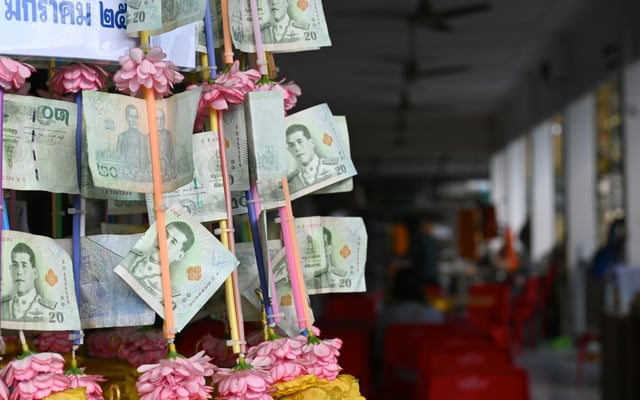
Thailand's overstay rules are written down, specific, and structured in a way that rewards one behaviour heavily over another. The fine is small and capped. The consequence that scales is the re-entry ban. Here is the structure.
The fine
Overstaying costs 500 baht per day, capped at 20,000 baht. The cap is reached at 40 days, and the fine stops accumulating after that.
It is paid at the immigration counter on departure, at an airport or a land border. Officers calculate the days, collect the fine and issue a receipt before stamping you out.
One thing worth knowing that rarely gets mentioned: for an overstay of a few hours caused by a flight delay or a schedule change, the fine is usually waived if you explain the situation to the immigration officer at departure. The Royal Thai Embassy states this directly. A missed connection that pushes you past midnight is not the scenario the penalty structure is aimed at.
The ban is what scales
The fine stops growing at 40 days. The re-entry ban does not, and this is the part that matters.
Where someone surrenders voluntarily — presenting at immigration on departure or at an office while still in the country:
Under 90 days: fine only, no ban
Over 90 days: up to a 1-year ban
Over 1 year: up to a 3-year ban
Over 3 years: up to a 5-year ban
Over 5 years: up to a 10-year ban
Being caught rather than surrendering carries substantially harsher consequences, including detention at an immigration facility before deportation, and a longer ban. The cash fine is identical either way.
So the structure prices the act rather than the wallet: a 41-day overstay and a five-year overstay cost the same money, and differ entirely in whether Thailand is available afterwards.
The date that governs
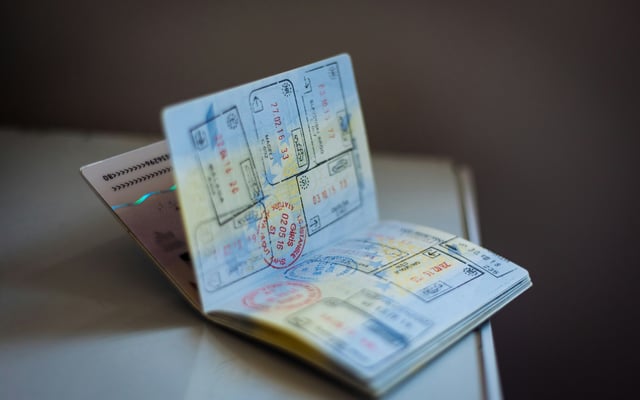
The "admitted until" date written on the entry stamp is the legal deadline. Not the exemption length in the abstract, not what an airline or booking site said, not a calculation from the arrival date.
Officers write that date by hand or stamp it, and it is worth reading before leaving the desk. Our guide to the visa extension process covers what to do if the stamped date is shorter than the trip.
Onward tickets — who actually checks
Proof of onward or return travel is a requirement, and the party that enforces it is usually the airline at check-in rather than Thai immigration on arrival.
That distinction is practical. An airline that will not board you leaves you at your departure airport, on your own time and money, with no Thai official involved. The requirement is most likely to bite thousands of miles before Thailand.
Proof of funds
A funds requirement exists in the regulations — commonly cited as 20,000 baht per person or 40,000 per family — and it is not routinely checked in practice. It remains a legal requirement that an officer may ask about, and the honest description is a rule that exists and is enforced inconsistently.
The arrival card
The Thailand Digital Arrival Card replaced the paper TM6 form in May 2025. It is mandatory for foreign nationals, free, and filed online before arrival at the official immigration site.
The filing window has changed since introduction, so the current timing is worth checking on the official site rather than taking from any guide. Our guide to visa requirements for Americans covers the arrival card in more detail.
Repeated entries
Back-to-back visa-exempt entries attract additional scrutiny, and admission on an exemption is at the officer's discretion rather than automatic. Thai policy in this area has tightened repeatedly, and what was routine in one year has not always been routine in the next.
Since 15 September 2026 part of that discretion has become a written rule: visa-exempt entry across a land border is limited to two visa-exempt entries per calendar year. Arrivals by air and sea are not capped. The same set of changes cut the exemption itself to 30 days, which shortens the runway on every deadline described above.
How this connects to the rest
Every deadline here is set at the immigration desk on arrival, and every decision that interacts with it — trip length, where you are in the final week, whether an extension is practical — is made either months before or days before. They are never made at the same time, and the stamp is the only one of them written down.
How the entry deadlines interact with itinerary shape is worked through in the complete Thailand trip guide.
FAQ
What is the overstay fine in Thailand?
500 baht per day, capped at 20,000 baht. The cap is reached at 40 days and the fine stops accumulating after that. It is paid at immigration on departure.
What happens if I overstay by a few hours?
For a short overstay caused by a flight delay or schedule change, the fine is usually waived if explained to the immigration officer at departure — the Royal Thai Embassy states this directly.
Will overstaying get me banned from Thailand?
Under 90 days with a voluntary surrender is a fine with no ban. Over 90 days brings a ban of a year or more, scaling with duration. Being caught rather than surrendering carries harsher consequences including detention.
Do I need an onward ticket for Thailand?
It is a requirement, and it is usually enforced by the airline at check-in rather than by Thai immigration on arrival — so it tends to bite before you leave home.
Is proof of funds actually checked?
Not routinely, though it remains a legal requirement an officer may ask about. The commonly cited figures are 20,000 baht per person or 40,000 per family.